
Stepping out of the International Arrivals Hall at Shenzhen Bao’an International Airport, Natalia Vilchinskaia from Ukraine and Brazilian visitor Stephan Klaus Bubeck were struck by the city’s traveler-friendly facilities: ATMs accepting major international cards such as Visa and Mastercard, a one-stop service center for international visitors offering payment, tourism, telecom, transport and immigration support, and convenient foreign-currency exchange counters.
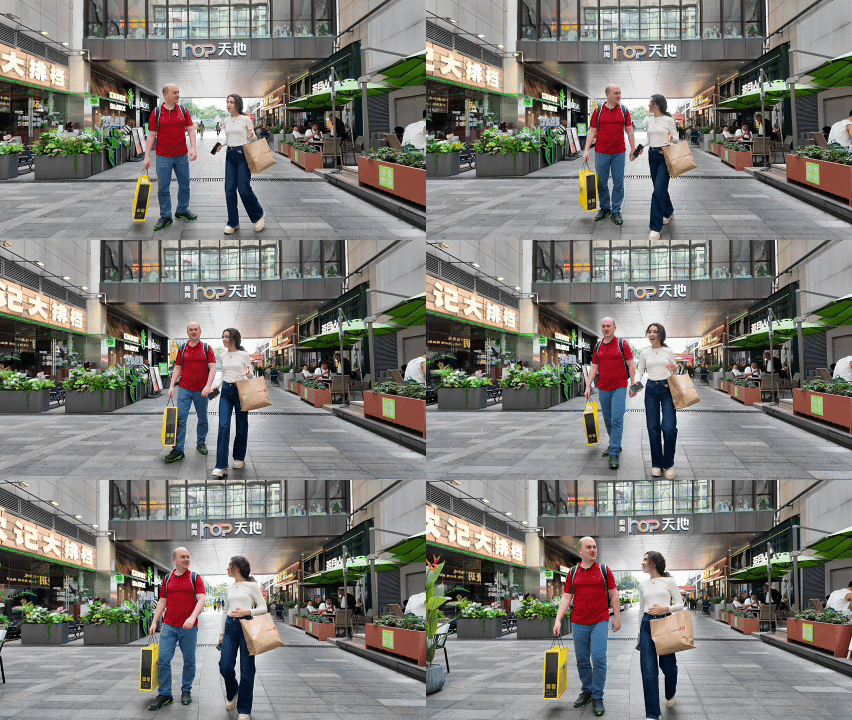
After withdrawing cash using their foreign cards, Vilchinskaia and Bubeck began a two-day, one-night immersive visit to Qianhai.
Natalia Vilchinskaia (R) from Ukraine and Brazilian visitor Stephan Klaus Bubeck begin a two-day immersive tour of Qianhai as part of the “Qianhai International Consumer Experience Officer” program.
Intl. visitors evaluate consumer services
With Shenzhen preparing to host APEC 2026, Qianhai has taken the lead in improving the international consumer environment. The Qianhai Authority, in partnership with Shenzhen Daily, launched the "Qianhai International Consumer Experience Officer" program. Ten overseas visitors from eight countries — including Vilchinskaia and Bubeck — served as experience officers.
Their itinerary spanned transport hubs, cultural and tourism sites, major shopping districts and neighborhood shops, covering the full consumer payment loop: arrival, transit, shopping, dining and small-value payments. Through comprehensive, on-the-ground testing, they identified the inconveniences and pain points foreign visitors face when spending and paying in Qianhai.

The program tested four payment methods — foreign card payments, binding foreign cards to local payment apps, using foreign e-wallets and cash — recording ease of use and success rates across different scenarios. Binding a foreign card to domestic wallets such as WeChat Pay or Alipay was the preferred option for many participants due to its convenience.
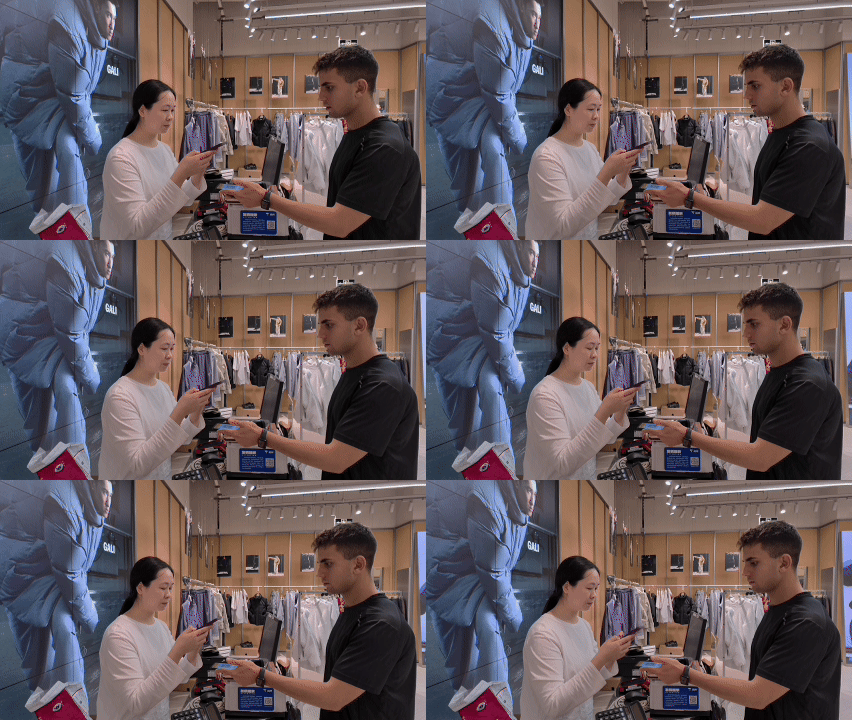
Brazilian participant Miguel Estou (R) uses Alipay to pay at a local shop in Qianhai.
Brazilian participant Miguel Estou recounted awkward moments when merchants were unable to provide change due to low cash reserves. After linking his foreign card to Alipay, he was able to scan and pay easily at everything from street carts to large supermarkets — a genuinely convenient and fast experience.
Shin Seon-yi from South Korea was pleasantly surprised to discover that Korean e-wallets Naver Pay and Kakao Pay were accepted at some venues, including the Sea World Culture and Arts Center and Qianhai Stone Park. She urged more merchants to display clear signage indicating acceptance of foreign e-wallets so international visitors can use them more easily. Several experience officers also expressed a strong preference for tap-to-pay, while noting wider deployment of compatible terminals is still needed.
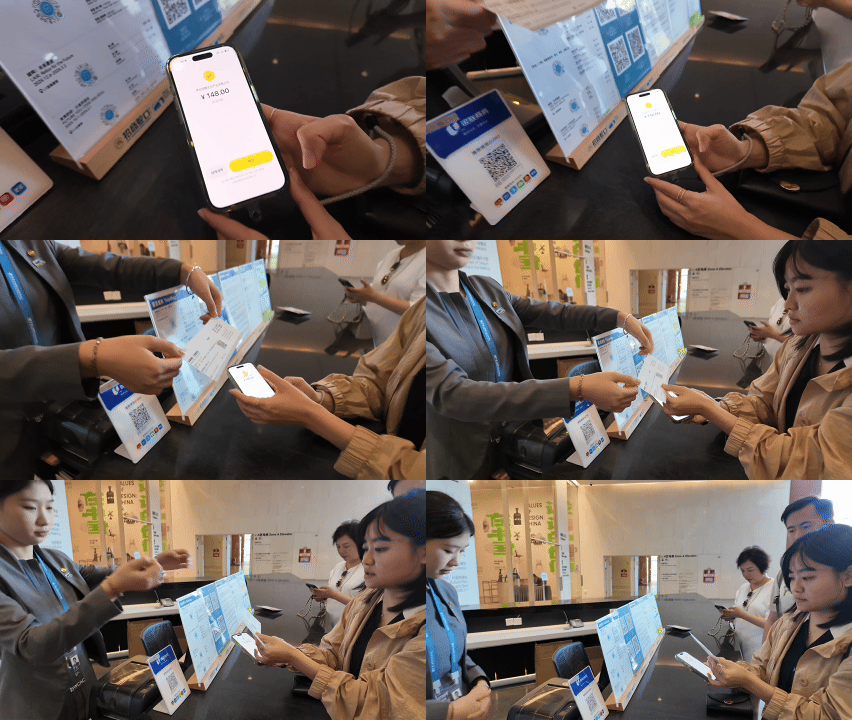
Shin Seon-yi from South Korea uses her e-wallet to make a payment at Sea World Culture and Arts Center.
Overall, visitors spoke highly of Qianhai’s diverse offerings. Cultural and tourism sites such as Qianhai Stone Park, OH Bay and Qianhai Snow World provided memorable experiences, while a mix of large malls and boutique shops met most shopping needs. Many were happy to find international brands that are rare even at home, reflecting Qianhai’s vibrant international commercial atmosphere.
Foreign think tank proposes practical upgrades

International participants share feedback with representatives from the Qianhai Authority during a symposium following their field visits.
Following the field program, a symposium with foreign residents developed practical recommendations regarding eSIM and international data plans, visitor internet access, clearer English and simplified operation guides, difficulties linking cards from some countries to mobile payments, locations for foreign currency exchange and public Wi-Fi coverage.
Jose Antonio Vigara from Spain recommended streamlining eSIM and international data plan procedures. Kulaha Stanislau, a resident from Belarus, suggested reducing lengthy public-service guides to one-page summaries to improve readability and usability.
Targeted measures rolled out swiftly
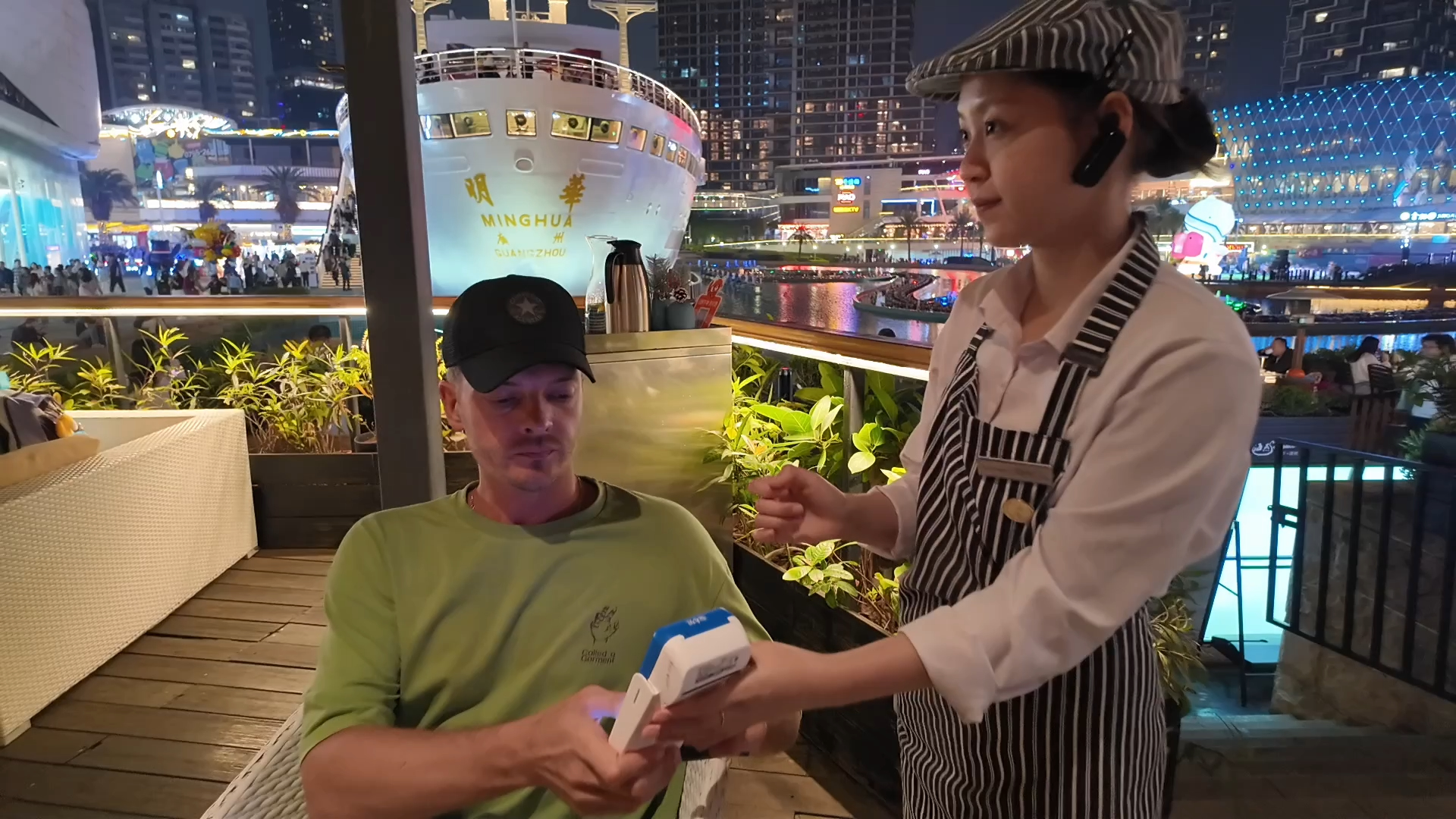
Murman Ugulava from Georgia makes a mobile payment at Sea World.
The Qianhai Authority responded quickly to the feedback, addressing transport, payment infrastructure, international consumer services and financial support measures.
Official data show POS acceptance of foreign cards in key shopping areas such as Qianhai Uniwalk and Qianhai MixC has exceeded 90%, while many major hotels and cultural-tourism venues in Qianhai have achieved 100% coverage.
Qianhai has also introduced a targeted subsidy program: merchants in key shopping districts who install or upgrade POS terminals to accept foreign cards are eligible for funding covering 50% of each device’s actual cost, up to 500,000 yuan (US$71,700) per business. Subsidy applications are being fast-tracked.
An official from the Qianhai Authority said the initiatives adopt a problem-driven approach with clearly defined objectives — addressing immediate service gaps while advancing long-term institutional and systemic reforms. The aim is to deliver tangible, visible improvements in time for APEC and create a replicable model for internationalized consumer services.
Boosting internationalization ahead of APEC
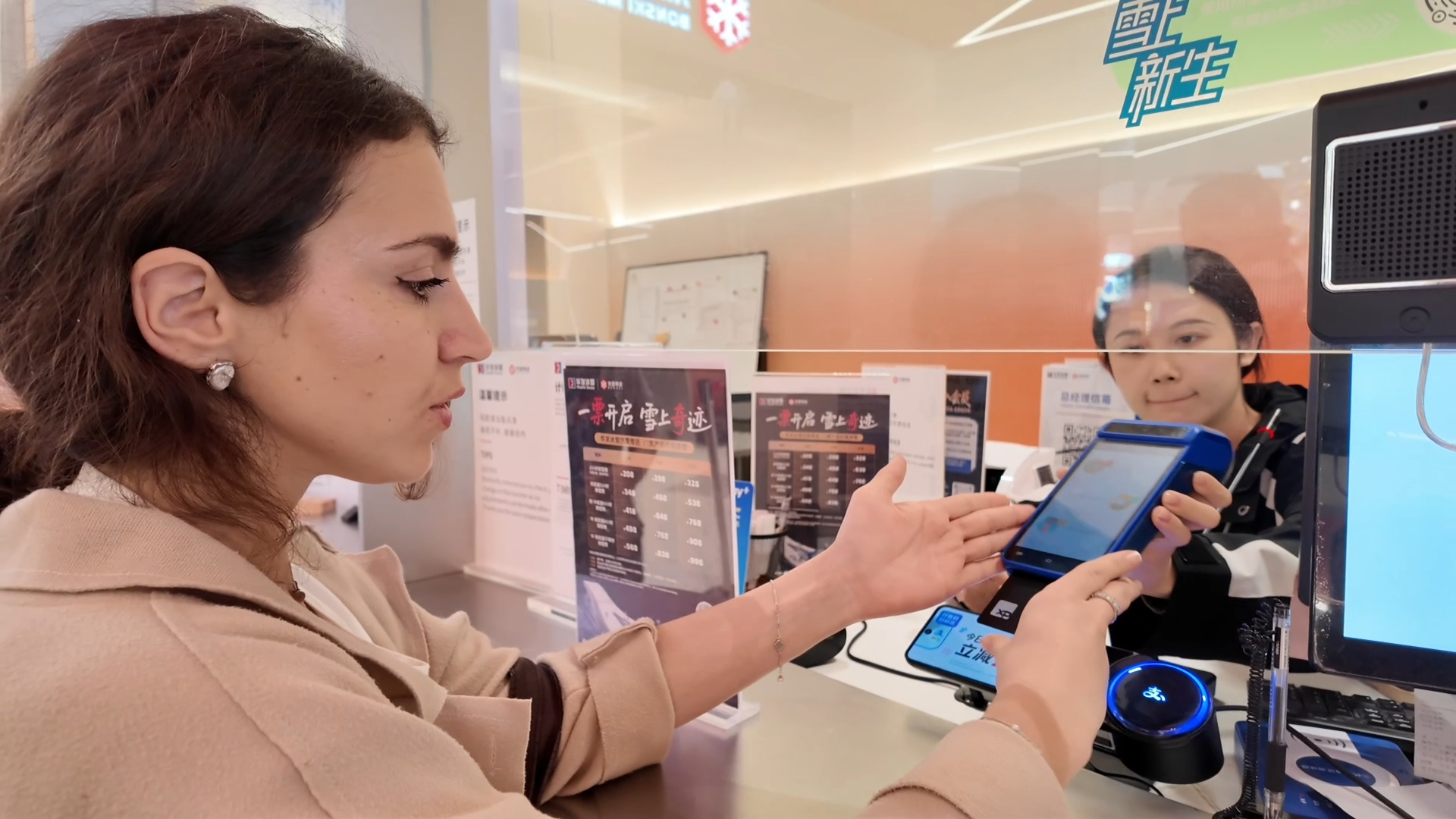
Natalia Vilchinskaia from Ukraine purchases tickets at Qianhai Snow World.
As Shenzhen’s primary gateway to the world, Qianhai has shown readiness to plan early, act with precision and proactively align with international norms. Through field testing, expert advice and targeted policies, Qianhai treats optimization of the international consumer environment as a key lever to strengthen local soft power and global competitiveness, and provide high-quality, convenient services for APEC and other international events.
Looking ahead, Qianhai will leverage APEC preparations to deepen the development of international neighbourhoods, upgrade supporting services, and strengthen its international image. The goal is to establish Qianhai as the core hub of a globally recognized international consumption centre — offering a replicable “Qianhai model” and China’s expertise to promote higher-level opening-up in Shenzhen and beyond.